

Critical thinking is an essential skill for individuals as they get around their educational journey and prepare intended for the complexities of the real planet. Within an age wherever information is numerous and readily available, a chance to analyze, examine, and apply understanding is somewhat more important compared to ever. Strong crucial thinkers not simply shine academically but in addition produce the confidence and even independence essential for effective decision-making. https://blogfreely.net/frontpeanut4/the-art-of-reasoning-must-have-critical-thinking-skills-regarding-students will discover the essential crucial thinking skills each student needs, how to identify these expertise in the classroom, and the traits that characterize effective student important thinkers.
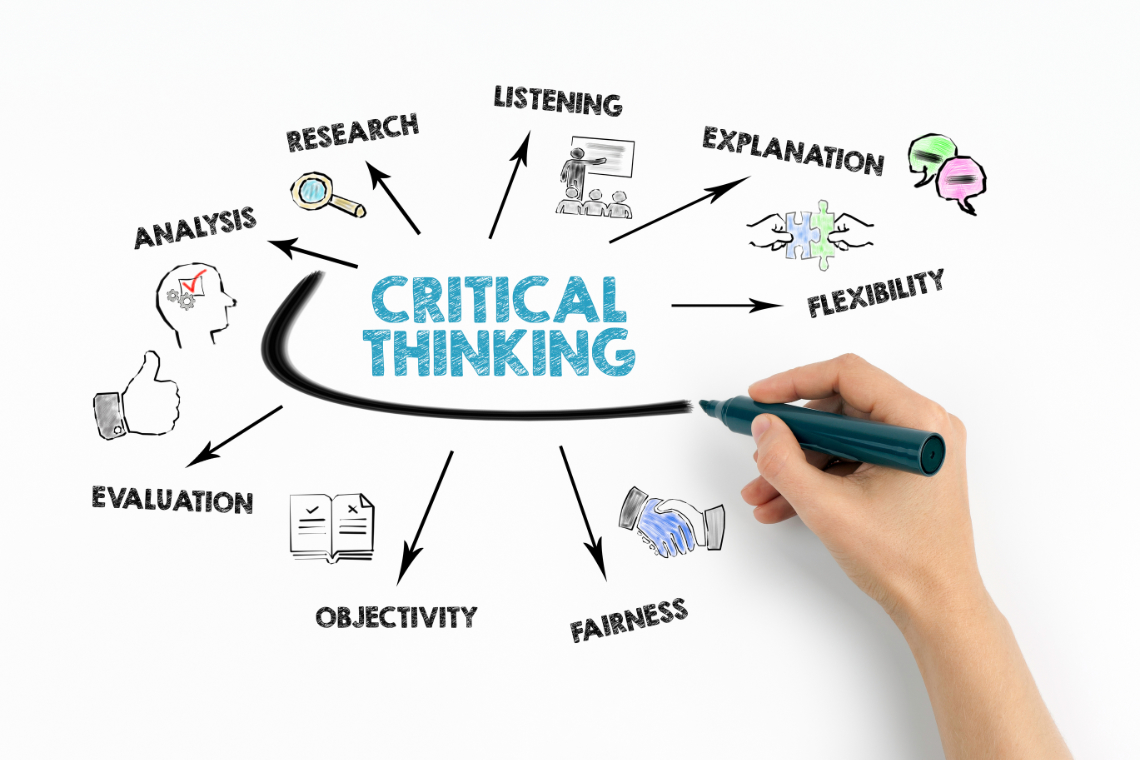
As educators, realizing and nurturing critical thinking abilities in students may have a profound impact on their very own success. From picking out logical reasoning to be able to evaluating problem-solving expertise, understanding these components can assist guide training strategies. By fostering a place that stimulates curiosity, questioning, in addition to open discussion, many of us can cultivate some sort of classroom culture wherever critical thinking thrives. In the following sections, we will delve deeper straight into the key qualities of strong important thinkers and exactly how these skills can end up being developed and examined throughout a student's learning experience.
Essential Critical Thinking Skills
Critical thinking will be a vital expertise for every scholar, enabling them to analyze information, assess arguments, and help make reasoned decisions. With its core, critical thinking involves the ability to question and assess the validity of information. This process encourages college students to appear beyond surface-level details and look for deeper understanding, cultivating a setting where interest and analytical skills can thrive. Students who cultivate these abilities are far better prepared to tackle sophisticated problems, whether in academic settings or in real-world scenarios.
A single of the vital components of essential thinking is the particular ability to differentiate between objective facts and subjective views. Students must learn to identify reliable options for information and discern biases that may well influence their comprehending. By honing this skill, they can engage in discussion posts and debates which has a more informed perspective. This not simply enriches their particular expertise but also improves their ability to communicate ideas successfully in front of large audiences, a characteristic that is important in both academics and professional situations.
Additionally, strong critical thinkers are adept at asking the correct questions. They don't only accept information in face value; they will delve deeper, seeking to understand typically the underlying assumptions in addition to implications. This curious mindset not only leads to the deeper comprehension of subjects but likewise fosters resilience in problem-solving. By pushing students to accept skepticism and challenge the usual understanding, we allow these to develop some sort of robust framework with regard to evaluating information, making sound decisions, plus navigating the difficulties of the entire world around them.
Identifying Strong Critical Thinkers
Identifying strong crucial thinkers in typically the classroom requires eager observation of selected behaviors and characteristics. These students often exhibit curiosity and also a willingness to check out complex questions. These people engage deeply using material, often requesting clarifying questions that indicate a desire to understand concepts rather than basically memorize facts. Whenever presented with brand new information, they remain skeptical, evaluating options and considering a number of viewpoints before creating conclusions.
Another key attribute of effective crucial thinkers is their particular proficiency in examining arguments. These students can distinguish among logical reasoning plus emotional appeals, letting them to develop sound arguments dependent on evidence. They will recognize logical myths and are adept at deconstructing flawed thinking, which showcases their very own ability to believe analytically. In discussions, they display exceptional communication skills, articulating their thoughts evidently and constructively difficult the ideas regarding others.
Moreover, strong critical thinkers demonstrate a good ability to suspect independently. They usually are not easily affected by popular opinion and can discover their own biases, showing a determination to objective examination. take a look at the site here -making abilities reflect a careful evaluation of options and consequences. Simply by actively participating in debates and discussions, they will further grow their important thinking capabilities, consistently refining their considered processes through interaction with peers.
Developing Critical Thinking in Students
Augmenting critical thinking abilities in students is definitely essential for their particular academic and private growth. One effective approach is always to make an environment where questioning is urged. When students feel comfortable asking concerns and challenging tips, it fosters the culture of interest and open-mindedness. Instructors can facilitate talks that explore distinct perspectives, prompting pupils to articulate their particular thoughts and provide facts to support their very own viewpoints. This exercise not only enhances their reasoning expertise but in addition builds their very own confidence in expressing opinions.
Another key approach for developing important thinking is through engaging activities that require analysis in addition to evaluation. Projects that involve problem-solving, discussion, or case research enable students to use logic and cause in real-world cases. By analyzing several sources of data and weighing various arguments, students learn to differentiate involving facts and opinions. This hands-on experience helps them recognize biases, recognize rational fallacies, and refine their capacity to create informed decisions. Such activities can also spark interest in subjects that might in any other case seem tedious.
Finally, expression and self-assessment carry out a crucial part in nurturing crucial thinkers. Encouraging students to evaluate their very own own thought techniques and decisions encourages metacognition, which can be typically the awareness of one's own thinking. A ponderer practices, such while journaling or party discussions, allow learners to consider just what they have got learned and how they will improve their reasoning abilities. By regularly reflecting on their thought patterns, students can easily develop a stronger foundation in critical thinking, ultimately setting up them to be successful inside both academic things to do and real-world challenges.